GradskillsPro
Why effective scientific communication is one of the most crucial skills in your academic career

~ How to write a paper using the IDEAS framework – post 1 of 6 ~
Posted on MM/DD/YYYY
Click here for part 1 / 2 / 3 / 4 / 5 / 6
Download the step-by-step process of the IDEAS framework HERE
Are you a grad student overwhelmed with your projects, maybe redoing the same experiments for the umpteenth time? Or are you at the stage of writing a paper and are missing the right support from your PI? Whatever stage you’re at, you might not realize that scientific communication skills are at the core of your struggles and that the following considerations and strategies can save you TONS of time, energy, and possibly your career.
This is the first part of a 6-part series (click here for part 1 / 2 / 3 / 4 / 5 / 6) where I’ll outline my process of writing and submitting scientific papers in weeks instead of months to years, without any writer’s block, stress, or countless rejections.
If you’d rather watch the video on Youtube, click HERE.
1. Scientific publications are the currency of any academic career
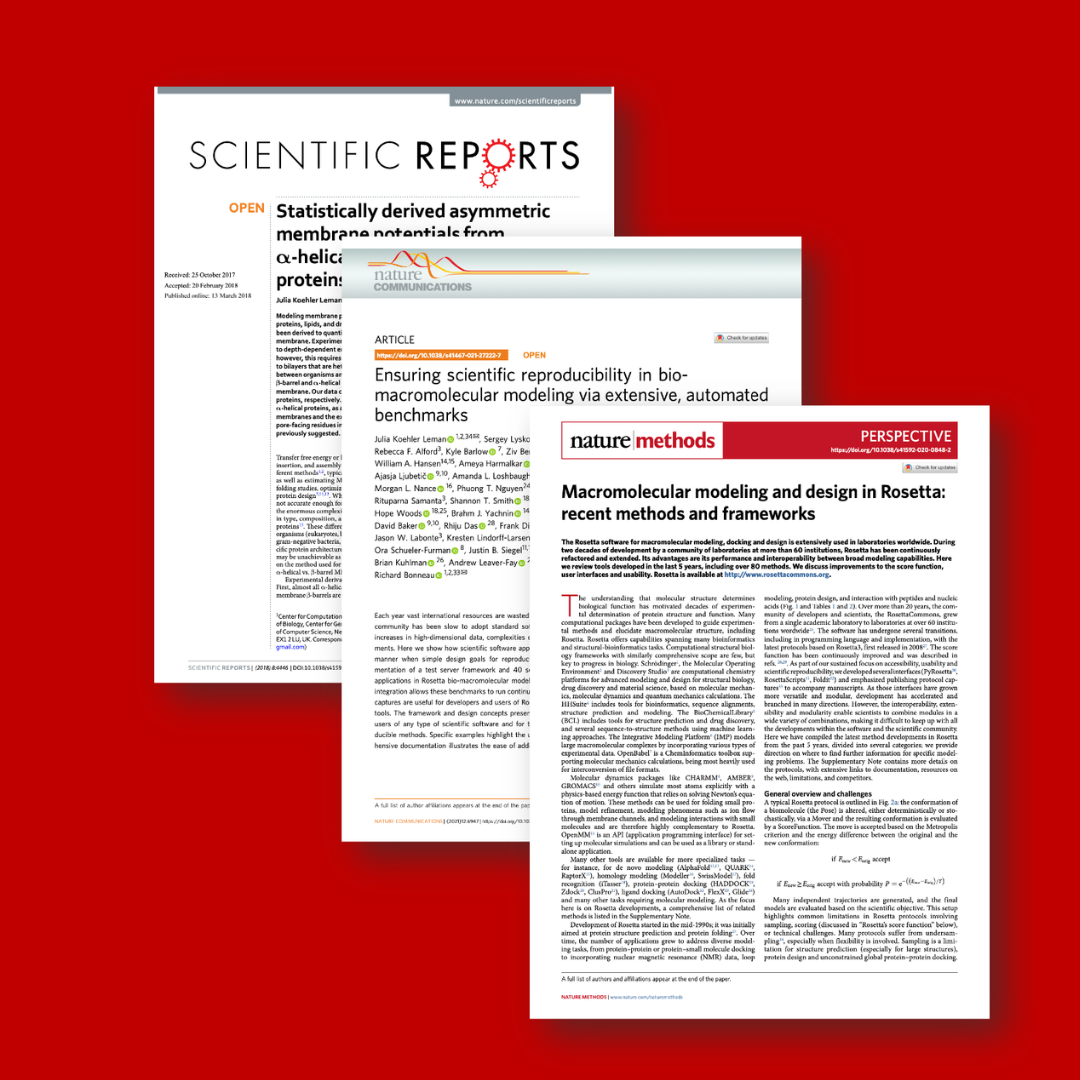
If you’re an undergrad, you have a better chance of getting into graduate school if you have a publication on your CV. If you’re a graduate student, you need publications to graduate. And if you’re a grad student or a postdoc, having more of higher-quality publications on your CV [1], [2] will drastically increase your chances for a better or more well-paid job or even faculty position offer. It’s no surprise that knowing how to write and write effectively and fast is crucial for your success.
2. Scientific communication is THE most important skill in your career
Imagine you're a beginning graduate student and it takes you a while to figure out your research idea and then, how to write and publish your first paper. In an average scenario, that can take up to a year and a half for most graduate students. And while writing your first paper might have taught you something, if you keep going like this, you can have 2 or 3 publications on your CV by the time you graduate.
Now imagine you would learn scientific writing and planning your experiments properly, early in grad school. Can you picture how your life would look like if you could cut your writing time even just in half? What if it would take you a fraction of the time it would normally take you? If you could write your first paper in several months you might graduate with 5 first-author papers, making you drastically more competitive in the job market.
3. Good scientific communication skills help establish you in the scientific ecosystem
You need papers to find collaborators and to collaborate effectively. You need publications to find a job, to get funding. And you need be able to look back into your own paper to remember what you did and how you did it. I can't remember how many times I went back to my own papers to figure out how I did something. What dataset did I use? What were the experimental conditions that I used? Remembering how you did certain things is crucial for your productivity.
4. Recruiters filter job applications based on the number and quality of publications
Now think about it from the recruiter's side [3], [4]. Who would you hire? Would you hire a Ph.D. with one good paper and when they talk about their science, you can't understand what they’re talking about because they’re going into way too much detail, and they can’t explain it to someone outside of their field? Or would you recruit a recent Ph.D. with four first-author articles and three conference presentations who can excite YOU about their research even though it’s something you’re barely familiar with?
This is exactly what you need to consider in grad school to determine what's vital for your career, happiness, and productivity. Who you would choose in this scenario reveals how crucial the number and quality of publications are in the employment market, regardless of whether we’re talking about academia, industry, or elsewhere.
Click HERE for your checklist on how I write my papers with the IDEAS framework
5. Reality check: most grad student DON’T get taught how to communicate effectively
When you start grad school, you may think, "Okay, just started grad school, I have lots to learn but I’ve got several years, so no rush. By the time I graduate, I will have been taught ALL the skills I need to be competitive, plus I have a big, fancy title.” What you don’t know is what makes top scientists stand out from the rest and how they get there. Let me break it to you: it’s most often NOT just the science.
And one of the problems is that scientific communication is barely taught at all. If it’s taught, then it’s not for credit or not taught well, and it’s certainly not prioritized, even though it’s one of the most essential skills in academia. Plus, professors are often way too busy to teach their trainees one on one on how to write and publish. In most cases, you’ll end up having to figure it out on your own, which is time consuming, ineffective, super frustrating for you and can put you behind in your career.
Now if you learn scientific communication and writing skills early, you'll be a lot less worried and overwhelmed in grad school since you know what to focus on, and how to get from point A to point B, and you're not making as many mistakes as others because you have a strategy to follow – the IDEAS framework.
6. Use the IDEAS framework to write and publish your paper
IDEAS is the strategy I follow to write and submit my papers in a matter of WEEKS with a very low rejection rate!!! This is also how I’ve successfully taught my about 30 trainees how to prepare and publish articles during the last 15 years.
So let’s break down what IDEAS means: I stands for Imagine, D for Draft & Document, E for Establish & Express, A for Adjust, and S for submit.
>> I - Imagine
Before you start writing, you think about questions like what type of paperyou want to publish, who your audience is, how you'll share it with your co-authors to get timely feedback, how you'll write the sections, and what journal you want to submit it to. You IMAGINE many of these aspects before you begin writing, essentially eliminating writer’s block this way.
>> D – Draft & Document
In “D” you’ll DRAFT the methods section and DOCUMENT what you did. In this stage, you’ll start the actual writing process. Here we’ll go through how to decide on the title, authors & co-authors, consider the writing style, and learn how to write the methods section and introduction.
>>E - Establish & Express
In “E” you’ll ESTABLISH the storyline and EXPRESS the specifics – this is the meat of your paper. You'll examine your data, determine your storyline, and create publication-quality figures. Then you’ll write the results section, discussion section, abstract, and conclusion.
>>A - Adjust
Now it’s time for you to ADJUST, modify and finalize the paper. You'll write the references, finish the supplement, and optimize the title. You'll modify your manuscript to improve clarity, add sections needed by the journal, finalize the author order, and incorporate feedback.
>>S - Submit
Then the final step is to SUBMIT. You decide whether to post your paper on a pre-print server, consider writing a pre-submission inquiry, create your cover letterand after your paper has gone through the review process, address the reviewer's comments.
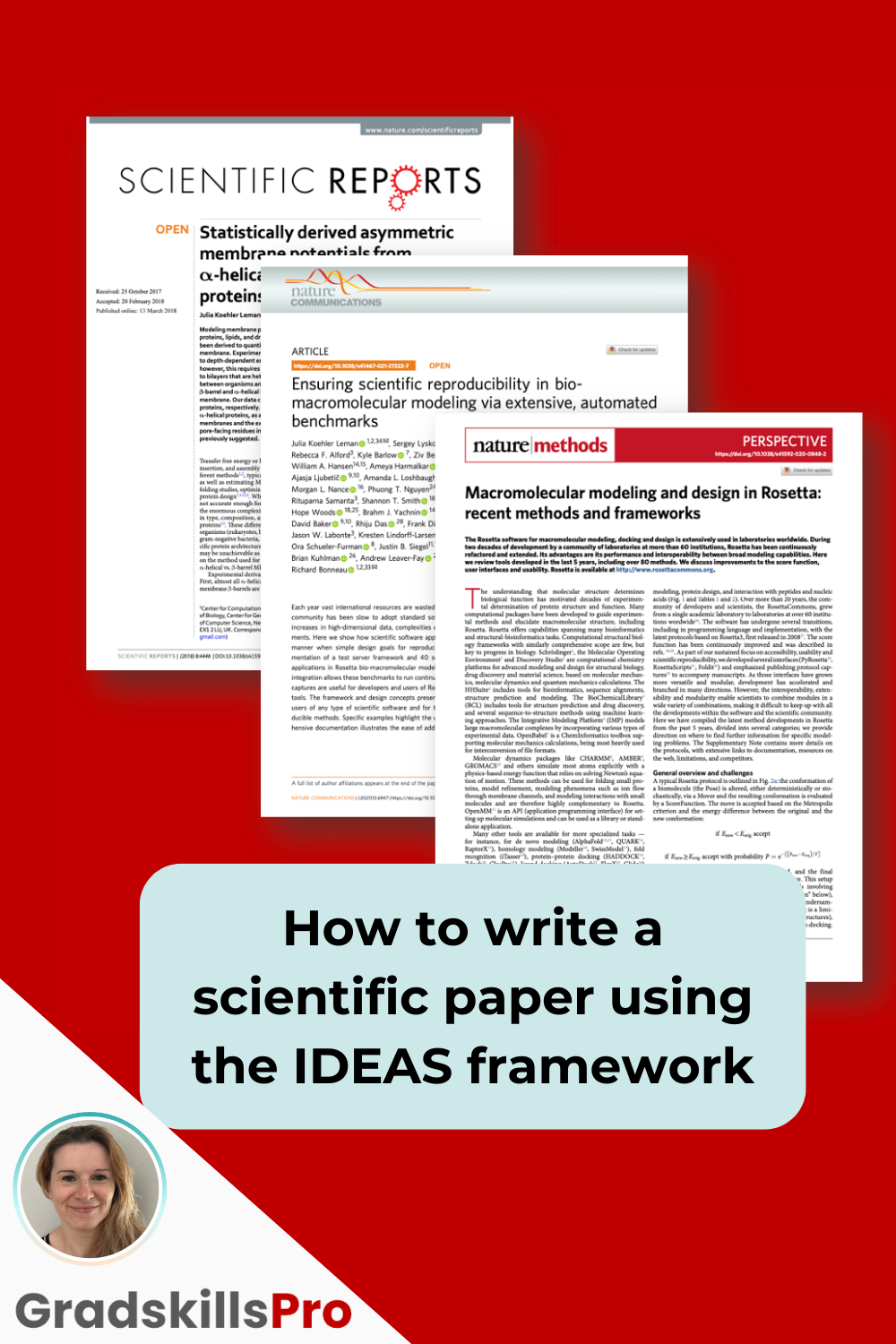
To download your checklist on how you can write scientific publications without writer’s block, anxiety, and major edits in no time, click HERE.
7. Submit your paper in a matter of weeks with the IDEAS framework
Most people start writing without planning, resulting in major writer's block. Thinking about essential factors such as the journal, the audience, and the type of journal, we’re essentially eliminating writer’s block from the get-go. I adopted this strategy to go from writing my first paper in one and a half years to two WEEKS of writing for my second paper, which only went through minimal edits, and won the Best Paper Award!
Click HERE to watch the video on Youtube.
Summary
A widespread fallacy is that writing is instinctive and can’t be taught. In fact, technical writing is a learnable skill, barely taught, but with huge consequences for your career. The IDEAS framework described here is a strategy you can follow, to write and submit your papers in a matter of weeks. It’s like following a recipe to bake a cake. For more details, check out the Youtube video above.
READ THIS NEXT: The 5 steps to beat writer’s block
Click here for part 1 / 2 / 3 / 4 / 5 / 6

Get weekly updates right into your inbox

Julia Koehler Leman, PhD
Computational biologist, Software Engineer, and Mentor
Passionate about teaching you about Scientific Communication



CATEGORIES
SOCIAL

SUBSCRIBE